


The Tropical Cloud Observations Group (TCO) collects and uses observations of tropical clouds and convection in the climate system. The aim of the group is to deepen the understanding and test hypotheses related to the role of clouds and convection mainly in the trades.
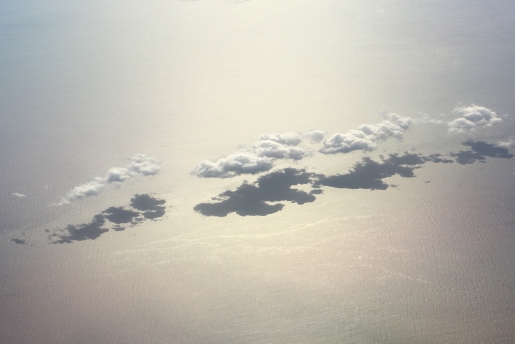
The trades are famous for their shallow "trade-wind" cumulus clouds. Because of their widespread occurrence, and therefore large statistical weight, shallow cumulus clouds have a nonnegligible impact on the shortwave radiation budget, hence on climate. Estimating their radiative effect in a global climate model, however, remains a challenge, not just because of their typical sizes, but also because their dependence on the state of the atmosphere is subtle.
In a nutshell, the TCO group works on increasing the knowledge of tropical clouds to help improving climate models.
Cloud Observatory and aircraft payload are the group's flagship activities
To achieve this the TCO group established and operates the Barbados Cloud Observatory (BCO) since 2010 and was responsible for developing and equipping the German research aircraft HALO (High Altitude and Long Range Research Aircraft) with cloud observation instruments.
Over the last few years the group has also become more active in supporting ship-based measurements of tropical clouds, building on previous experiences supporting the marine aerosol network, that provides ship-borne aerosol measurements around the globe.


Data curation and scientific exploitation
As the group's experimental activities have become well established and the data collection matured, the group is increasingly focused on its curation, through the development of new data concepts, its scientific exploitation. The latter involves scientific hypotheses testing as well as model evaluation. It is not a coincidence that both phases of the DYAMOND project, the first intercomparison project of global storm-resolving models, were centered on intensive HALO observation periods.
The groups follows an open data policy and aims to make their data available to as many collaborating scientist as possible. Our recent research highlights include the use of observational insights in the variability of low-level cloudiness in the trades to evaluate numerical weather prediction and climate models. Also, we are working towards a better characterization and understanding of the trade-wind cumulus clouds in their role as precipitating shallow systems.
The data provided through the measurements facilitate the development of new methods to understand factors influencing meso-scale cloud patterns. For example, a machine learning algorithm has been trained to recognise and automatically detect different patterns of shallow convection [1].
These four previously identified patterns of meso-scale cloud organization in the trades — called Sugar, Gravel, Flowers, and Fish — are studied using long-term records of ground-based measurements, satellite observations and reanalyzes. [2]
A third study used dropsonde data to explain variability in the cloud activity that is not otherwise apparent in variations of large-scale environmental factors usually used to parameterize clouds [3].
In the coming years the group will focus on exploiting the measurements and develop a cloud atlas. The aim will be to combine different measures of cloudiness to be explored and linked to modeling.
[1] Rasp, S.; Schulz, H.; Bony, S.; Stevens, B. Combining Crowd-Sourcing and Deep Learning to Explore the Meso-Scale Organization of Shallow Convection. Bull. Amer. Meteor. Soc.2020. https://doi.org/10.1175/BAMS-D-19-0324.1.
[2] Schulz, H.; Eastman, R.; Stevens, B. Characterization and Evolution of Organized Shallow Convection in the Trades. Journal of Geophysical Research: Atmospheres 2021, 126 (17). doi:10.1029/2021JD034575…
[3] George, G., Stevens, B., Bony, S., Klingebiel, M. & Vogel, R. (2021). Observed impact of meso-scale vertical motion on cloudiness. Journal of the Atmospheric Sciences, 78, 2413-2427. doi:10.1175/JAS-D-20-0335.


More Content

Clara Bayley Conducts Postdoctoral Research as Part of the Susanne Hasselmann Fellowship
Clara Bayley, recent graduate of the IMPRS-ESM program, is conducting postdoctoral research on the microphysics of tropical clouds using a numerical…
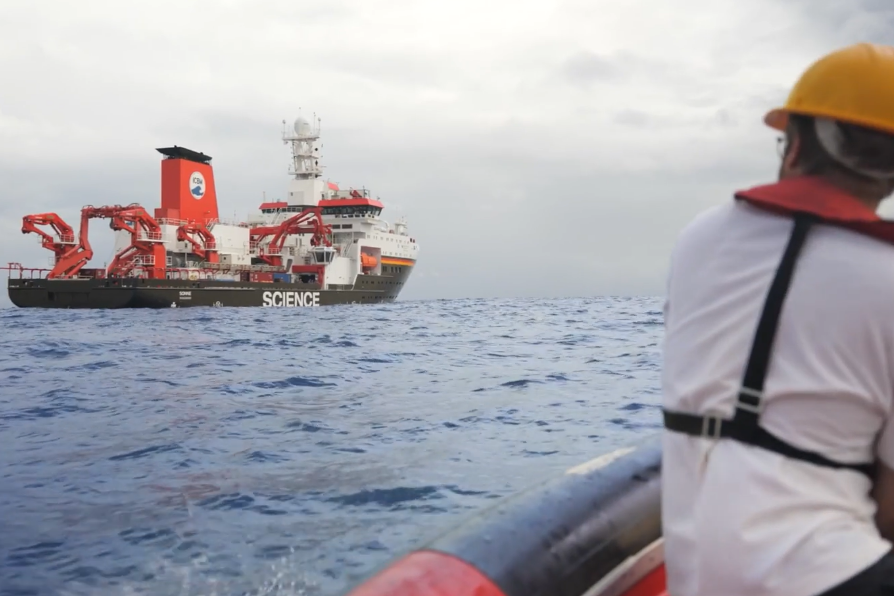
Radiosonde measurements of the intertropical convergence zone
On 27 June 2021, the research vessel RV SONNE set off under the cruise guidance of Prof. Peter Brandt from GEOMAR in Kiel and co-leader Dr. Julia…