
News
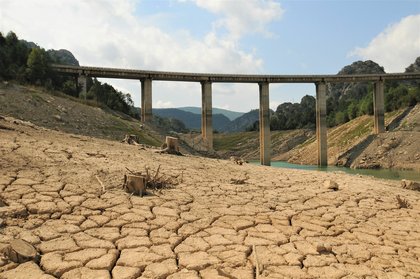
More weather extremes in Europe during the summer under climate change
Due to global warming, the North Atlantic Oscillation, an atmospheric circulation pattern that strongly influences European weather, is becoming more…
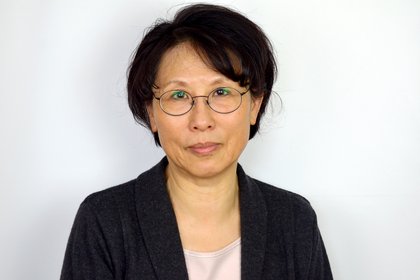
Jin-Song von Storch elected into the European Academy of Sciences
The European Academy of Sciences has elected Jin-Song von Storch as a new member, thereby honoring the climate researcher's outstanding scientific…
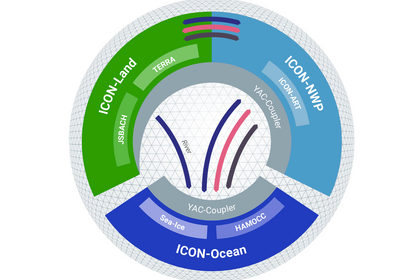
Weather forecasting and climate modeling move closer together
The ICON model can be used for weather forecasting as well as climate predictions and long-term projections. So far, however, the different…
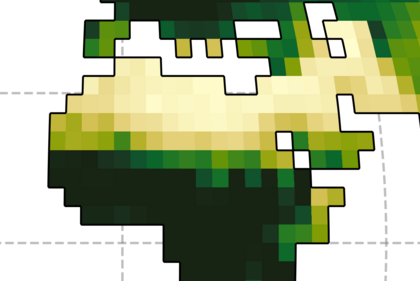
Recurring cases of Saharan and Sahelian greening over the past 800,000 years
A humid climate in the Sahara and Sahel played a critical role in shaping the environment for early human settlement and migration. A new study…
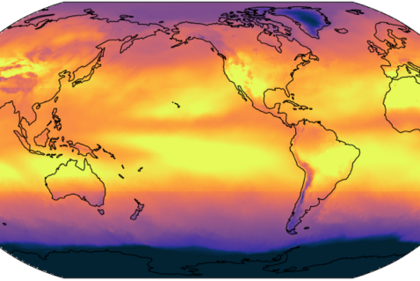
Earth’s self-regulation is weaker than assumed
Earth responds to temperature changes by emitting more or less thermal radiation into space. This mechanism, known as long-wave feedback, influences…
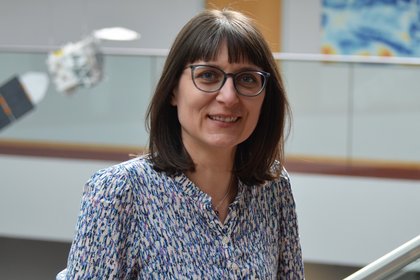
Franziska Glassmeier heads new Lise Meitner Research Group at the MPI-M
A new Lise Meitner Research Group focusing on "Multiscale Cloud Physics" has started at the Max Planck Institute for Meteorology. The team led by…
Our Research
CELLO Conference, 16–18 September 2025, Bucerius Law School, Hamburg
During our anniversary year, the conference “Climate Exploration in Lively Liaison with the Ocean” (CELLO) gathers experts in ocean turbulence, air-sea and ice-sea interaction across scales, and modeling. We are thrilled to welcome an outstanding lineup of keynote speakers.
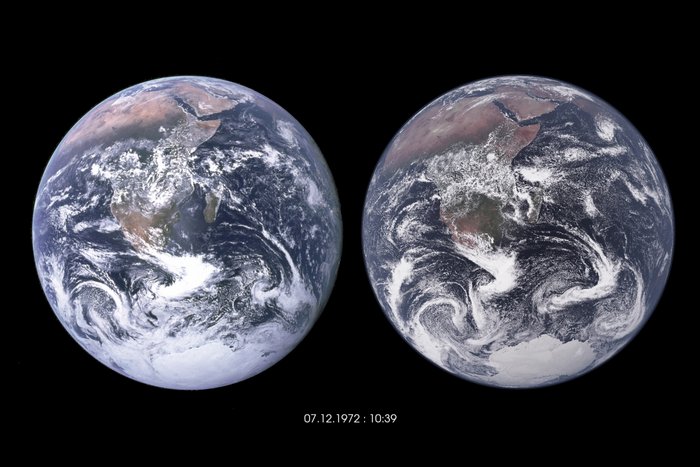
Revisiting the Blue Marble: ICON simulating the coupled climate system at 1 km
The early 1970s is often associated with the birth of the modern environmental movement. In 1970 the first Earth day was celebrated, and Greenpeace was founded in 1971. In March 1972 the Club of Rome published its influential report entitled the “limits of growth”. The growing environmental consciousness was ...
The International Max Planck Research School on Earth System Modelling
The International Max Planck Research School on Earth System Modelling (IMPRS-ESM) offers a structured, interdisciplinary and international program for graduate students who want to earn a PhD degree. The main focus of our doctoral program is to advance our understanding of processes and dynamics in the Earth system as well as our prediction skills.