


News

Humboldt Fellow Nadja Omanovic Conducts Research on Arctic Clouds
Nadja Omanovic, a postdoctoral researcher in the Lise Meitner Research Group “Multiscale Cloud Physics,” is studying the impact of Arctic clouds on…

Which Mechanisms Control the Temperature Trend in the Tropical Pacific?
According to climate projections, the eastern tropical Pacific will warm up in the long term, but the opposite is currently being observed. A new…

Clara Bayley Conducts Postdoctoral Research as Part of the Susanne Hasselmann Fellowship
Clara Bayley, recent graduate of the IMPRS-ESM program, is conducting postdoctoral research on the microphysics of tropical clouds using a numerical…

Lara Wallberg Receives Böttcher Award
Lara Wallberg was honored with the Johann Max Böttcher Award for her innovative research on the variability of hot summers in Europe. The Max Planck…

Jochem Marotzke Honored with the Federal Cross of Merit
Jochem Marotzke, director at the Max Planck Institute for Meteorology, has been awarded the Cross of the Order of Merit of the Federal Republic of…

New Study Provides Empirical Evidence of Human Influence on Regional Climate Change
Climate change is affecting the entire planet—and yet different regions are warming at different rates. Where is human-induced warming already clearly…
Our Research
Department Climate Physics
Department Climate Dynamics
Department Climate Variability
Independent Research Groups
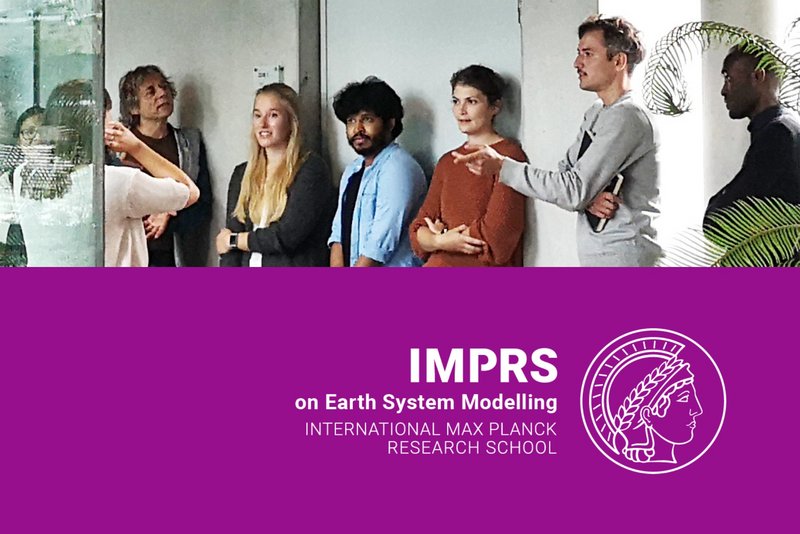
PhD positions in Climate Research - Annual Call 2027 open 1 July to 15 September
The International Max Planck Research School on Earth System Modelling (IMPRS-ESM) is a structured, interdisciplinary and international program for graduate students who want to earn a PhD degree. The aim of our doctoral program is to advance our understanding of processes and dynamics in the Earth system as well as predictive capabilities.
ICON Team Receives International Recognition for Groundbreaking Achievements in High-Performance Computing
A team led by the Max Planck Institute for Meteorology and the German Climate Computing Center has received the prestigious Gordon Bell Prize for Climate Modelling for their groundbreaking work at the intersection of climate science and high-performance computing. Their achievement—a landmark simulation of the full Earth system with the ICON model at 1.25-kilometer resolution—overcame a challenge long considered impossible to master.

More Content

Seminars
Joint Seminar: Aerosol–Ice–Cloud Interactions: A Justified Afterthought
Efforts to constrain estimates of the effective radiative forcing (ERF) from aerosol–cloud interactions (ERFaci) have primarily focused on aerosol effects on liquid clouds. In contrast, the impact of aerosol effects on ice clouds is much less understood. Using a perturbed parameter ensemble (PPE) of CAM6 simulations, we investigate the response of ice clouds to anthropogenic aerosols and its sensitivity to key aerosol and microphysics parameters. We quantify the radiative impacts of changes in ice crystal size, ice water path, and ice cloud fraction using a new cloud radiative kernel framework. A pathway is proposed that relates aerosol-induced subtropical low cloud changes to tropical ice cloud changes via changes in boundary layer moisture. The PPE results demonstrate that dynamical changes can drive the SW aerosol forcing on ice clouds in certain regions, adding another dimension of complexity to aerosol–cloud interactions. Hence the simplistic picture of weak aerosol impacts on ice clouds is revealed to obscure substantial variability in aerosol–ice–cloud interactions, with potential implications for efforts to constrain ERFaci.
Date
03.11.2026
Time
15:15
- 16:40Event Place
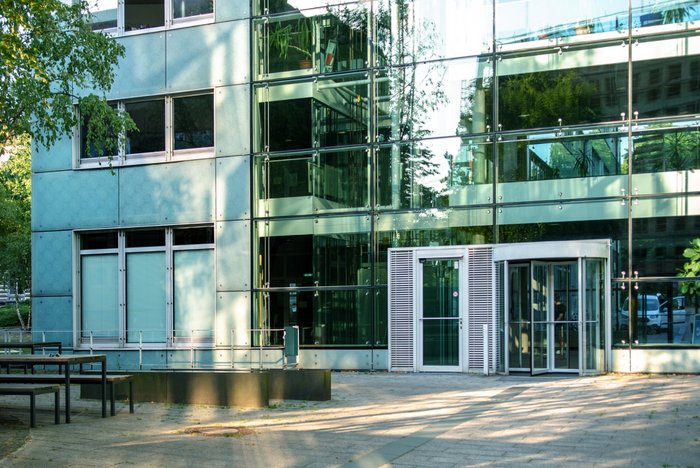
Bundesstr. 53, room 022/023
Seminar Room 022/023
Ground Floor
Bundesstrasse 53
20146 Hamburg, Hamburg
Speakers
Brandon DuranChair
Clara BayleyBack to overview